
Dental Crowns
Serving Chevy Chase in Washington, DC


Sometimes a tooth is still there, but it is no longer reliable. It might be cracked, have a large filling that is failing, or have lost too much structure after decay or a root canal. Even if your smile looks fine, the tooth itself can be weak.
A dental crown is used when a tooth needs more than a filling.
The dental crowns Washington DC patients trust at Chevy Chase Digital Dentistry reflect the same careful approach Dr. Azin Ghesmati uses for all her work. She focuses on keeping what is healthy, removing only what is damaged, and rebuilding the tooth to restore both how it works and how it looks. For some people, a crown protects a tooth after decay or a root canal. For others, it repairs a cracked tooth, covers a weak filling, or finishes treatment for a missing tooth with a dental implant. The right choice depends on how much of the tooth is still strong.
Dr. Ghesmati uses an engineer’s mindset in her dental care. When she works on crowns, she pays close attention to details like how the tooth is prepared, how the crown fits, how your bite feels, and how the crown meets the nearby teeth. A crown should do more than protect the tooth. It should help your bite feel stable again.
A dental crown is a custom-made cover that protects a weak, broken, or heavily repaired tooth. It brings back the tooth’s shape, strength, and function.
This definition is important. People sometimes call a crown a simple cap, but it is actually one of the most important ways to restore a tooth when a filling is not enough. Even if a tooth has a lot of decay, a crack, or has lost structure, it can often be saved with a crown. Crowns are also used in cosmetic dentistry to improve the look of misshapen or discolored teeth, or as the visible part of a dental implant.
At Chevy Chase Digital Dentistry, crowns are only recommended when they truly make sense for your dental health and appearance.
There are many reasons someone might need a crown, and it does not always start with pain.
A crown may be recommended when there is:
A crown should only be used when the tooth truly needs that kind of protection, not just out of routine.
A crown protects the tooth, but careful planning is still essential.

Some dental offices use crowns as the standard solution for damaged teeth. Dr. Ghesmati takes a different approach. She looks at how much healthy tooth is left, how your bite affects the tooth, where the edges should be, and whether the tooth can be restored to last. Sometimes an inlay, onlay, or even a filling is a better choice. Other times, a crown is needed to protect the tooth.
That is why Dr. Ghesmati takes a careful approach to crowns. She aims to remove as little as possible, protect what is left, and make sure the new crown fits naturally with your other teeth.
The best preventive care is not one-size-fits-all.
At Chevy Chase Digital Dentistry, the dental crown process uses digital technology for precise and controlled results.
Your visit begins with a comprehensive evaluation of the affected tooth, the adjacent teeth, and your overall bite function. Patients may seek treatment for dental decay, fractured teeth, replacement of failing restorations, completion of root canal therapy, or restoration of missing teeth with dental implants.
When treatment is indicated, Dr. Ghesmati carefully prepares the tooth by removing only compromised tooth structure while preserving as much healthy enamel as possible. Advanced digital imaging and intraoral scanning technology are used to accurately assess the tooth, surrounding structures, and occlusion, ensuring precise treatment planning and exceptional results.
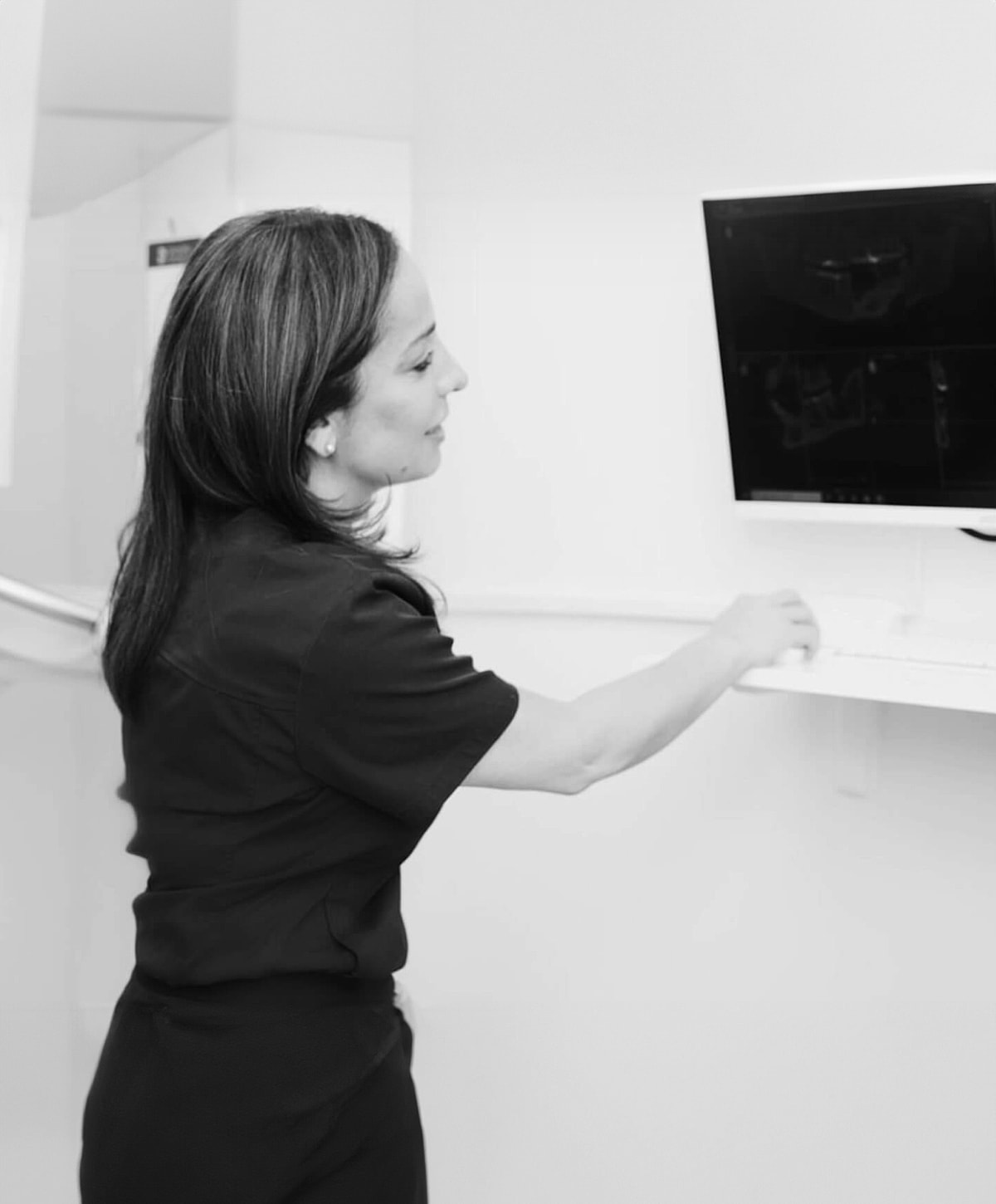
Rather than using traditional putty impressions, the office uses digital scanning and computer-aided design for more precise crowns. Many patients can get same-day crowns with this technology, often finishing treatment in just one visit. If the crown needs to be made in a dental lab, a temporary crown is placed until the final one is ready.
When your custom crown is ready, Dr. Ghesmati checks the fit, shape, and bite before securing it with dental cement. Whether you get your crown the same day or after lab work, the goal is always the same: a precise fit, stable function, and a natural look next to your other teeth.
Choosing the right material is important for crown treatment.
High-quality ceramic crowns can restore both the strength and appearance of your teeth. Modern crowns are matched to the color, translucency, and shape of your natural teeth, so you do not get the dark line at the gum that older metal crowns sometimes caused.
Many people prefer porcelain crowns because they blend in naturally with your other teeth. A good porcelain crown should work well and look great, letting your tooth fit back into your smile without standing out.
A crown should protect your tooth without feeling bulky. Most people notice their tooth feels more stable, less sensitive, and stronger after treatment. If your bite was affected before, your mouth may feel more balanced once the crown is in place.
The goal is for your smile to look natural. The crown should match your other teeth in color, shape, and size, so your dental work does not stand out.

Crowns can last a long time, but how long depends on the tooth, your bite, the material, and how well you care for it. With good dental care and daily brushing and flossing, a crown can often last ten years or more.
Long-term success depends on proper care and maintenance, including diligent oral hygiene, regular preventive visits, and management of habits such as clenching or grinding. The longevity of a dental crown is influenced by many factors, including the forces placed upon it during function. For example, a crown restoring a heavily loaded tooth may experience different wear patterns than one subjected to lighter biting forces.
The investment in a crown varies based on the condition of the tooth, the restorative material selected, whether the restoration is fabricated in our office or by a specialized dental laboratory, and whether additional treatment is required beforehand. During your consultation, we will review all treatment options, associated fees, and available insurance benefits to help you make an informed decision that aligns with both your clinical needs and personal preferences.
Dr. Azin Ghesmati combines meticulous treatment planning, aesthetic judgment, and advanced digital technology to create crowns that are both functional and natural in appearance. Her philosophy is rooted in conservative dentistry—preserving healthy tooth structure whenever possible while restoring strength, comfort, and long-term stability. Every restoration is carefully designed to harmonize with your bite, complement your smile, and support lasting oral health.
Before entering dentistry, she studied software computer engineering and worked in project management. That background still shapes how she approaches complexity. She plans carefully, studies how the parts relate to one another, and builds treatment around what is correct for the tooth rather than what is routine.
Patients often notice how calm and organized their experience is. The standards are high, the plan is clear, and nothing feels rushed.

If you have a cracked tooth, a large failing filling, a tooth that has had a root canal, or a tooth that just does not feel reliable, a crown might be the right solution. The Washington, DC dental crowns Dr. Ghesmati places are designed to fit precisely, look natural, and last. To schedule a consultation, please contact Chevy Chase Digital Dentistry.